콘텐츠로 이동

14.4 블록 코드 반주

Music Theory for the 21st-Century Classroom

by Robert Hutchinson


21세기 음악이론 한글판 (dcinside digital piano gallery)

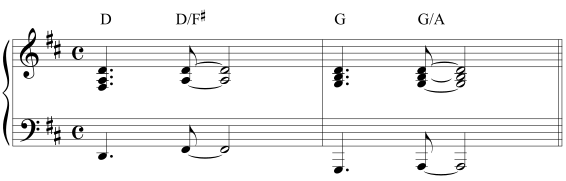
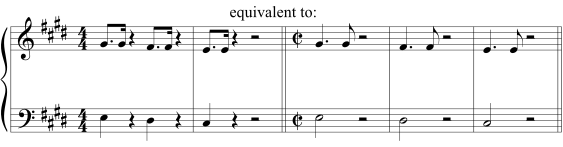
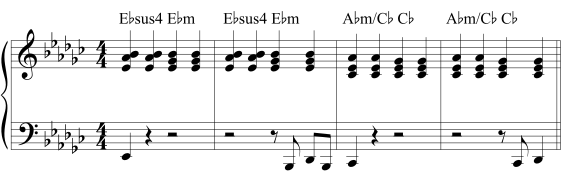
이 섹션에서는 대중음악에서 자주 등장하는 몇 가지 반주 리듬을 이야기함. 첫 번째 리듬은 한 마디에 코드가 두 개인데, 첫 번째 코드는 1박에 나오고 두 번째 코드는 2박 다음의 약박에 나옴
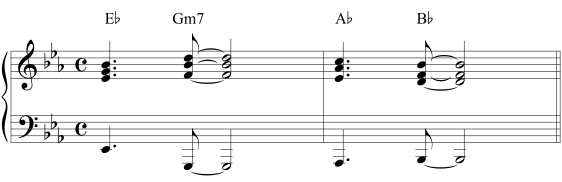
Figure 14.4.1. Marvin Gaye and Ed Townsend, “Let’s Get It On” (1973)

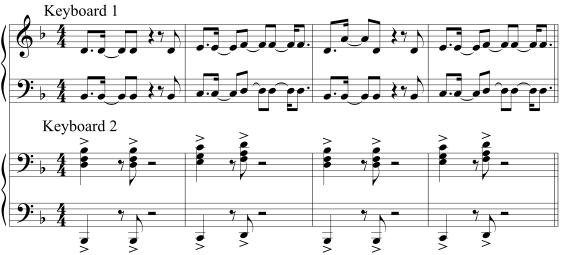
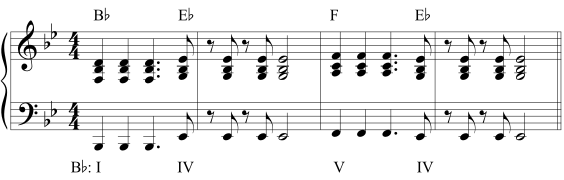
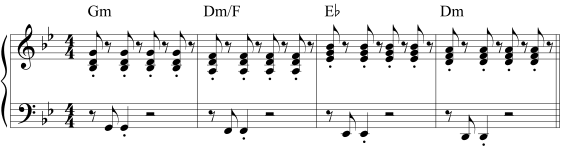
다음 예시에서도 비슷한 리듬과 베이스 라인을 발견할 수 있음

Figure 14.4.2. Ed Sheeran, “Thinking Out Loud” (2014)

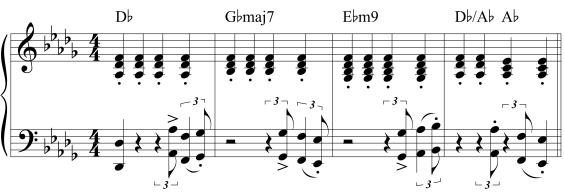
“1 (2) &” 리듬은 영화 The Breakfast Club과 관련된 곡인 “Don’t You (Forget About Me)”에서도 찾을 수 있음.
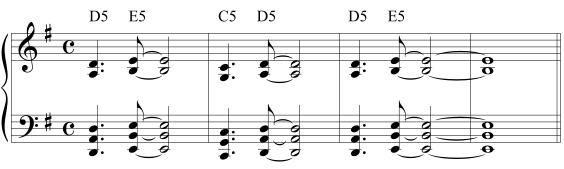
Figure 14.4.3. Keith Forsey and Steve Schiff, “Don’t You (Forget About Me)” (1985)

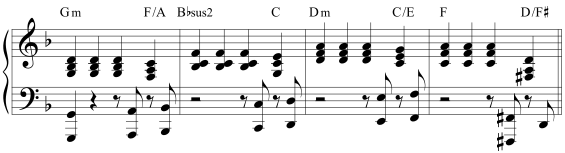
아래는 “1 (2) &” 리듬의 블록 코드 반주 예시 다섯 가지임.
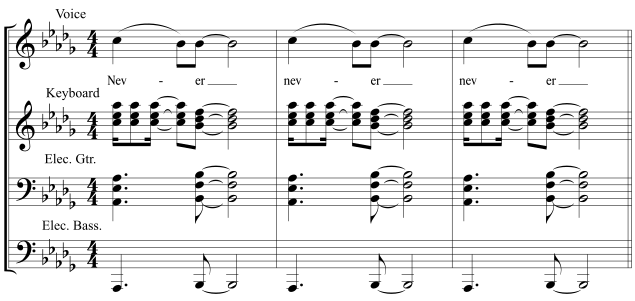
Figure 14.4.4. Holly Knight, Gene Bloch, Ann Wilson, and Nancy Wilson, “Never” (1985)
Figure 14.4.5. Kesha Sebert, Lukasz Gottwald, Benny Blanco, “Tik Tok” (2009)
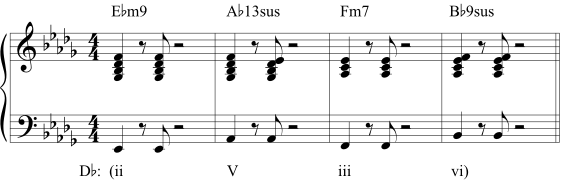
Figure 14.4.6. Bruno Mars, Philip Lawrence, Christopher Brown, James Fauntleroy, Johnathan Yip, Ray Romulus, Jeremy Reeves, Ray McCullough II, “That’s What I Like” (2017)

위에 있는 예시(“That’s What I Like”)가 Earth, Wind, and Fire의 “September”와 같은 진행을 가졌다는 걸 알 수 있음.
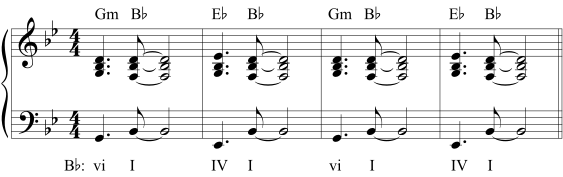
Figure 14.4.7. Charlie Puth, Cameron Thomaz, Andrew Cedar, Justin Franks, Dann Hume, Josh Hardy, and Phoebe Cockburn, “See You Again” (2015)
Figure 14.4.8. James Arthur, Neil Ormandy, Steve Solomon, “Say You Won’t Let Go” (2016)

아래 예시는 축소된 형태의 “1 (2) &” 리듬을 보여줌

Figure 14.4.9. Justin Bieber, Benny Blanco, and Ed Sheeran, “Love Yourself” (2015)

다음 블록 코드 반주 패턴은 “1 2 3 (4) & (1) & (2) & 3” 리듬이라고 설명하기보다는 “Barbara Ann” 리듬이라고 하는 게 더 쉬움. 아래는 블록 코드든 베이스 라인에서든 이 리듬을 사용한 여섯 가지 예시임.
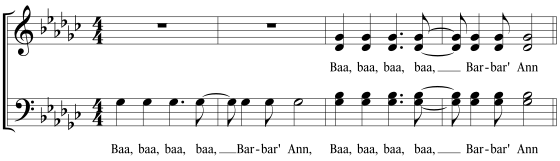

Figure 14.4.10. Fred Fassert, “Barbara Ann” (1961)
Figure 14.4.11. Brian Holland, Lamont Dozier, Eddie Holland, “You Can’t Hurry Love” (1966)
Figure 14.4.12. Sara Allen, Daryl Hall, and John Oates, “Maneater” (1982)
Figure 14.4.13. Kimberley Rew, “Walking On Sunshine” (1985)
Figure 14.4.14. Nic Cester and Cameron Muncey, “Are You Gonna Be My Girl” (2003)

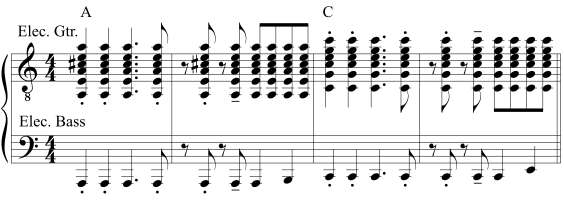
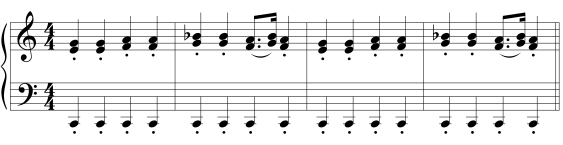
이 리듬의 느린 버전은 Deep Purple의 “Smoke on the Water”에 나옴.

Figure 14.4.15. Ritchie Blackmore, Ian Gillan, Roger Glover, Jon Lord, and Ian Paice, “Smoke on the Water” (1973)

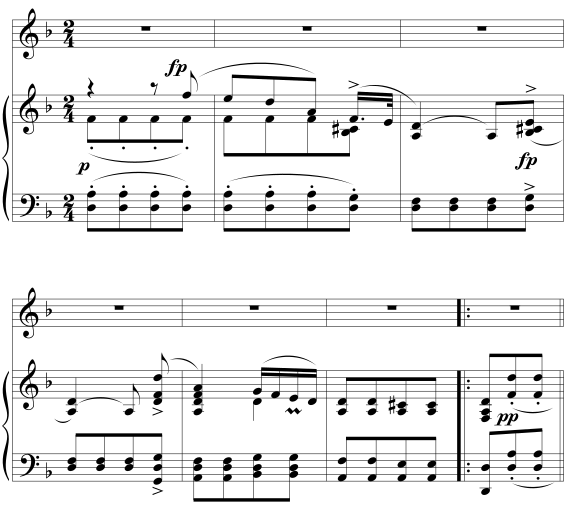
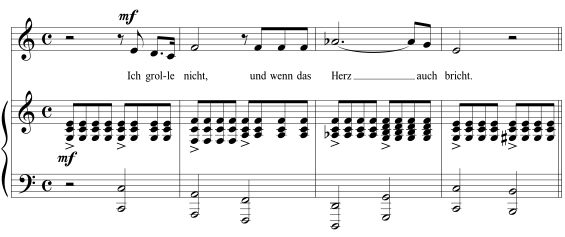
반복되는 8분음표 코드는 ‘고전(클래식)’ 음악에서 자주 나타나는 구성임.
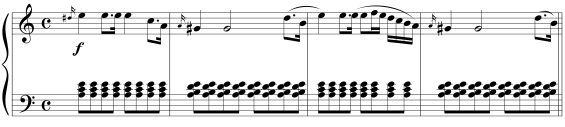
Figure 14.4.16. W.A. Mozart, Piano Sonata K. 310, I (1778)
Figure 14.4.17. Franz Schubert, Winterreise, D. 911“Gute Nacht” (1828)
Figure 14.4.18. Robert Schumann, Dichterliebe, “Ich grolle nicht” (1844)

다음 예시는 뮤지컬 애니(Annie)의 베이스 라인에 있는 “1 (2) &” 리듬임.
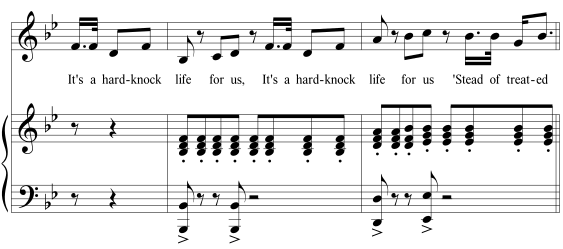
Figure 14.4.19. Charles Strouse and Martin Charnin, Annie, “It’s the Hard Knock Life” (1977)

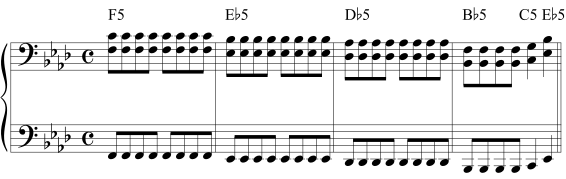
반복되는 8분음표는 록 음악에서 흔한 반주 구성임.

Figure 14.4.20. Geoff Gill and Cliff Wade, “Heartbreaker” (1979)

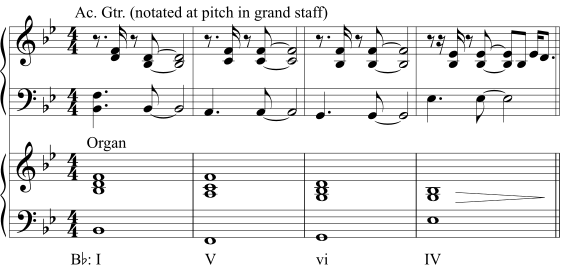
반복되는 8분음표 리듬은 최근 대중음악에서도 흔히 쓰이고, 다음 예시에 1950년대 진행(즉, I–vi–IV–V)을 사용하고 있음.
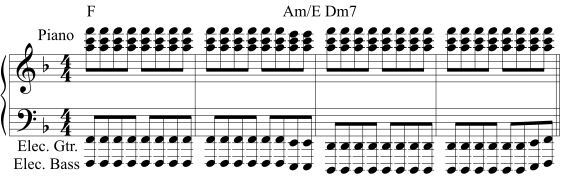
Figure 14.4.21. Nate Ruess, Andrew Dost, Jack Antonoff, and Jeff Bhasker, “We Are Young” (2011)

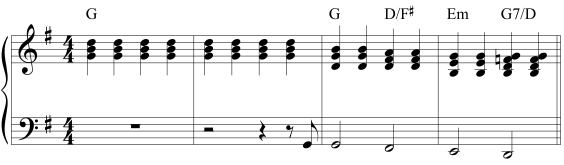
반복되는 4분음표 코드 또한 ‘고전(클래식)’ 음악과 대중음악에서 흔한 반주 리듬임.
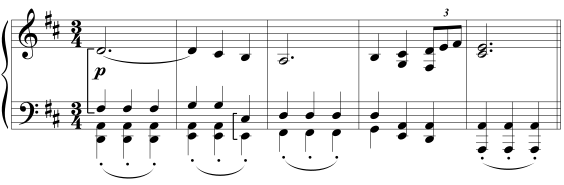
Figure 14.4.22. George Frideric Handel, “Ombra mai fu,” Xerxes, HWV 40 (1738)
Figure 14.4.23. Joe Raposo, Jon Stone, and Bruce Hart, “Can You Tell Me How to Get to Sesame Street?” (1969)
Figure 14.4.24. Billy Joel, “She’s Got a Way” (1971)
Figure 14.4.25. Lou Gramm and Mick Jones, “Cold As Ice” (1977)
Figure 14.4.26. Gordon Sumner, “Roxanne” (1978)
Figure 14.4.27. Michael Bublé, Alan Chang, and Amy Foster-Gillies, “Haven’t Met You Yet” (2009)
Figure 14.4.28. Sara Bareilles, “Love Song” (2007)

이 글에 관련해 의견을 나누기 위해 dcinside digital piano gallery에도 게시하고 있습니다. 질문이나 토론은 갤러리를 방문해주세요.

🔗 원문 14.4 https://musictheory.pugetsound.edu/mt21c/BlockChordAccompaniments.html